Why Your Delegates Are Secretly Planning a Holiday (and Why You Should Help Them)
The "standard" business trip is dead. In 2026, the lines between work and life have blurred so much that 67% of business travellers are now adding leisure time to their professional trips . This isn't just about catching an extra day of sun; it’s a mental health and lifestyle necessity, especially for Gen Z and parents, who are the most likely to merge work and family time.
CARBON FOOTPRINTEVENTSBLEISURE
Mark Haley
3/13/20263 min read
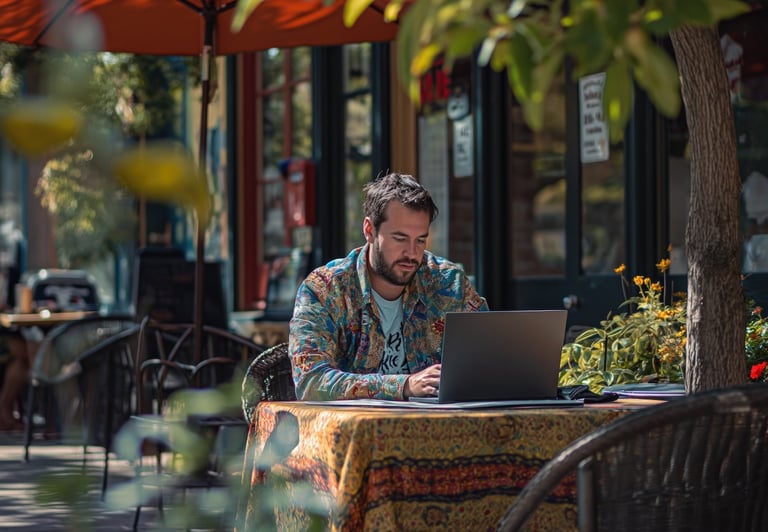
We’ve all seen the LinkedIn posts: the "humble-brag" photo of a lanyard next to a lukewarm coffee, captioned with excitement about a three-day conference. But in 2026, those three days are rarely just about the conference. Behind that lanyard is a professional who has likely spent six hours at their kitchen table, surrounded by seventeen open browser tabs, trying to figure out if they can justify bringing their partner along, if the hotel gym actually exists, and if their carbon footprint is going to trigger an awkward email from the ESG department.
As global business travel spending hits an eye-watering $1.64 trillion this year, the industry is facing a reality check. The "Business Traveller" is gone; in their place stands the Expert Researcher. These delegates aren't just looking for a keynote; they’re looking for a trip that aligns with their real life. If event planners and venues don't start helping them, they’ll simply keep "side-stepping" the system.
The "Bleisure" Boom: It’s Not a Secret Anymore
Let’s be honest: the "work-only" trip is a dying breed. Data from 2025/2026 shows that 67% of business travellers added leisure time to their most recent trip. This isn’t just a trend; it’s a cultural shift driven by a desire for "me time" and destination exploration.
For Gen Z and parents, this "Bleisure" integration is a dealbreaker. They are looking for work flexibility that allows them to merge career growth with family time or personal wellbeing. Yet, most event registration processes are still stuck in 2019. They offer a ticket and perhaps a link to a "preferred" hotel, but they leave the delegate to figure out the "leisure" part on their own. This lack of guidance forces delegates into a fragmented research loop, jumping from Google to Airbnb to Instagram, just to see if the trip is worth the time away from home.
The Wellbeing Requirement: Sleep Over Seminars?
We’ve finally stopped pretending that business travel isn't exhausting. In 2026, self-care isn't a luxury; it’s a productivity requirement. Professionals are more aware than ever of how remote work and travel blur work-life boundaries.
The numbers don't lie: 77% of travellers now want facilities that support their wellbeing, from sleep-enhancing amenities to proper fitness spaces. Why? Because the top work-related health issues for travellers remain stress and sleep problems. When a delegate researches an event, they aren't just looking at the speakers; they’re looking for sensory spaces, quiet rooms, or partnerships with local wellness studios. If the event planner doesn't provide this "pre-trip" content, like wellness tips or packing reminders, they are already losing the delegate's interest.
Global business travel spending hits an eye-watering $1.64 trillion this year.
The Research Paradox: Seventeen Tabs and a Headache
This is where the "Research Paradox" kicks in. The modern delegate is a high-stakes researcher. They want to travel responsibly, but they’re being set up to fail. While 86% of travellers want to travel sustainably, only about half of that number actually manage to do it .
The reason? A massive lack of clear information. To plan a "sustainable" trip that also includes a weekend extension, the delegate has to use multiple, fragmented tools . They are checking:
Train vs. Air: Trying to find a rail option that doesn't take ten hours or cost three times as much.
ESG Alignment: Does this event’s values actually match my company's (or my own) goals?
The "Vibe" Check: Is the venue in a "dead zone," or is there a local vibe that makes the trip feel like more than just a series of fluorescent-lit rooms?
Planners and venues often stop their "hospitality" at the venue doors, leaving the delegate to fend for themselves in the "digital wild" . This is the gap that Biz-u-mi is closing, moving from a transaction to a Connected Journey.
77% of travellers now want facilities that support their wellbeing.
The "Side-Stepper" and the Corporate Risk
When the planning process is this painful, delegates do what humans do best: they find a workaround. Between 48% and 68% of business travellers now book their trips independently, outside of approved corporate channels. They "side-step" the system because legacy corporate tools are too rigid to handle their "Bleisure" or wellbeing needs.
But this "travel leakage" creates a huge problem for the enterprise:
Duty of Care: If the company doesn't know where the delegate is (because they booked an Airbnb three miles away to be near a park), they can't help them if something goes wrong.
CO2 Blindness: Transportation is the "elephant in the room," making up 50% to 90% of an event's carbon footprint. If everyone books independently, the company has no way to track or report these Scope 3 emissions accurately.
Conclusion: Time for a Connected Ecosystem
The first step in the delegate’s journey, Awareness to Intent, is currently broken. We are asking delegates to be travel agents, carbon accountants, and family coordinators all at once, without giving them the tools to do it.
To keep delegates coming back in 2026, we have to recognize that the "trip" starts the moment they hear about the event. We need a connected ecosystem that treats their "Bleisure" goals, their sleep quality, and their carbon footprint as priorities, not afterthoughts.